Indigenous Housing System in Australia: case study evidence

A comprehensive national Aboriginal and Torres Strait Islander housing strategy is required to align mechanisms and policies, promote greater accountability to First Nations people, and bolster self-determination in the sector.

Published by AHURI in February 2026 this is the second of three reports arising from a research Inquiry examining Australia’s Indigenous housing system. The report examines how the system is structured, operates, and is funded, and explores housing tenure choices for Aboriginal and Torres Strait Islander peoples.


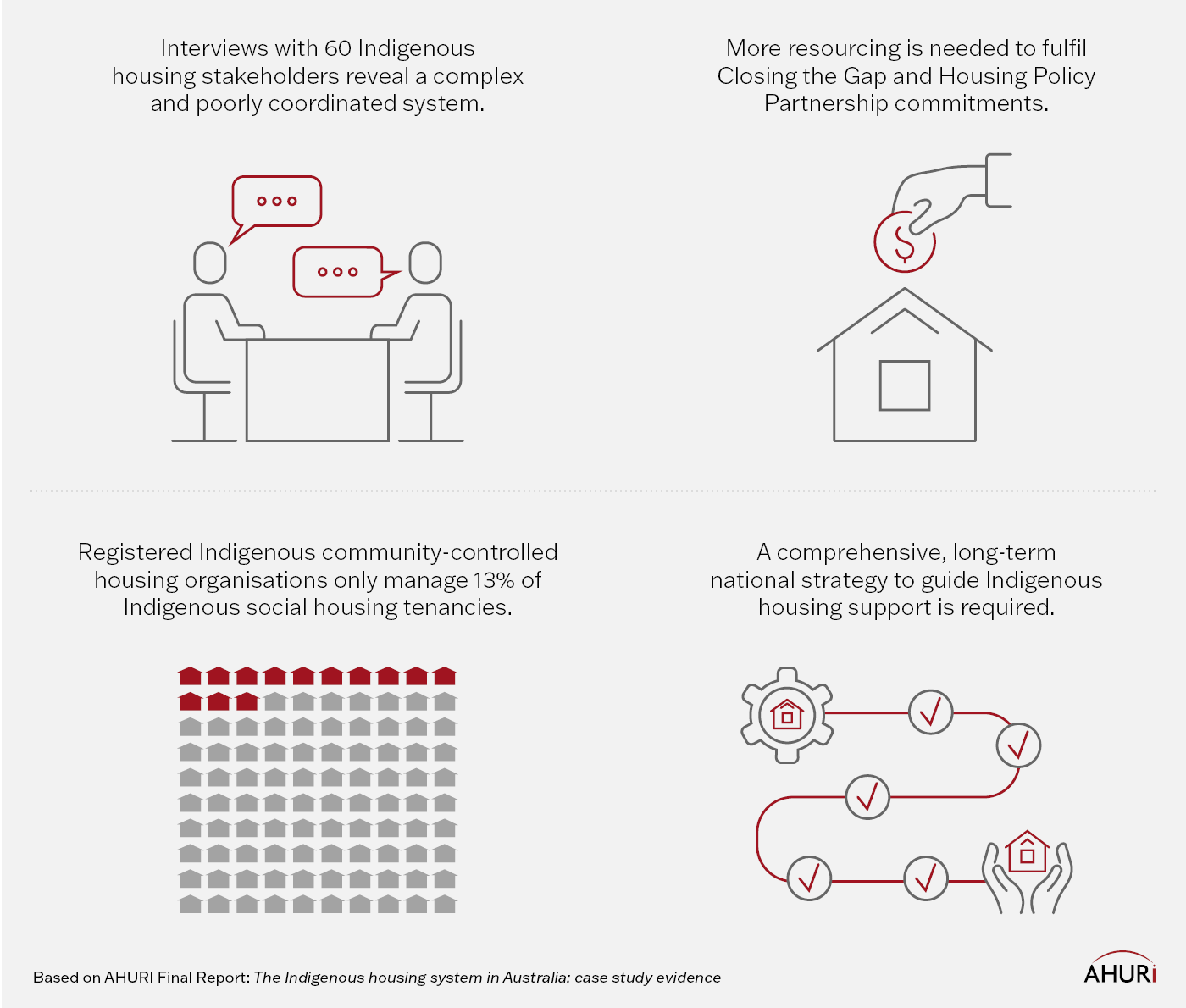
Interviews were undertaken with 60 key Indigenous housing stakeholders – both government and community-based. In addition, researchers undertook a desktop analysis of relevant documents, websites and reports.


The research found while multiple agencies are developing and implementing Indigenous housing policy at federal, state and territory levels, no national agency or minister has designated overall responsibility. This has led to complex, diverse and poorly coordinated governance arrangements. While the desire for self-determination is positively contributing to change, existing initiatives are failing to realise objectives and a national strategy to guide Indigenous housing is needed. In addition they found the potential of many Indigenous housing organisations is untapped and not helped by a range of funding and finance barriers.


Recommended policy actions


  • Establish a national Aboriginal and Torres Strait Islander housing strategy. A comprehensive, long-term national strategy is required to align governance mechanisms and policies across all levels of government and meet established targets. The Indigenous-led strategy development should be based on firm policy and cultural principles and consider the full housing continuum.
  • Guarantee dedicated funding. A national Aboriginal and Torres Strait Islander housing investment plan with adequate funding commitments and a fit-for-purpose funding model is proposed to tackle unmet housing need.
  • Bolster Indigenous community-controlled housing. A range of initiatives to support sector growth and sustainability includes subsidies to address gaps between rents and operating costs, and simplification of the housing regulation system to reduce administrative burdens and support ICCHOs to achieve and maintain registration.
  • Boost innovative housing options. Hybrid tenure options (such as shared equity, rent-to-buy and community land trusts) and flexible community-controlled housing models have the potential to achieve greater security of tenure and housing choice.
  • Enhance self-determination. To meet Closing the Gap commitments, the Housing Policy Partnership needs sustained investment, and governments need to respect its processes and recommendations.


Sean’s thoughts


Housing responses to community needs must be as varied as the communities that they serve. And yet, we need to balance these responses with systems that must respond to national challenges. As a Minister’s advisor once told me, “These are complicated issues”.  Unfortunately, complicated issues require complicated solutions. Solutions that will not work for everyone, but that may work for some. Getting enough of these solutions is the key to solving the problem. As a guiding principle, let’s look for reasons to say yes to things, and see if that gets us further down the road towards a stronger Indigenous housing system.  This is the challenge that all parts of the system need to meet; Governments, ACCOs and the Communities in which they operate.


This is paragraph text. Click it or hit the Manage Text button to change the font, color, size, format, and more. To set up site-wide paragraph and title styles, go to Site Theme.

Share This Article

Other articles you may like

August 10, 2025
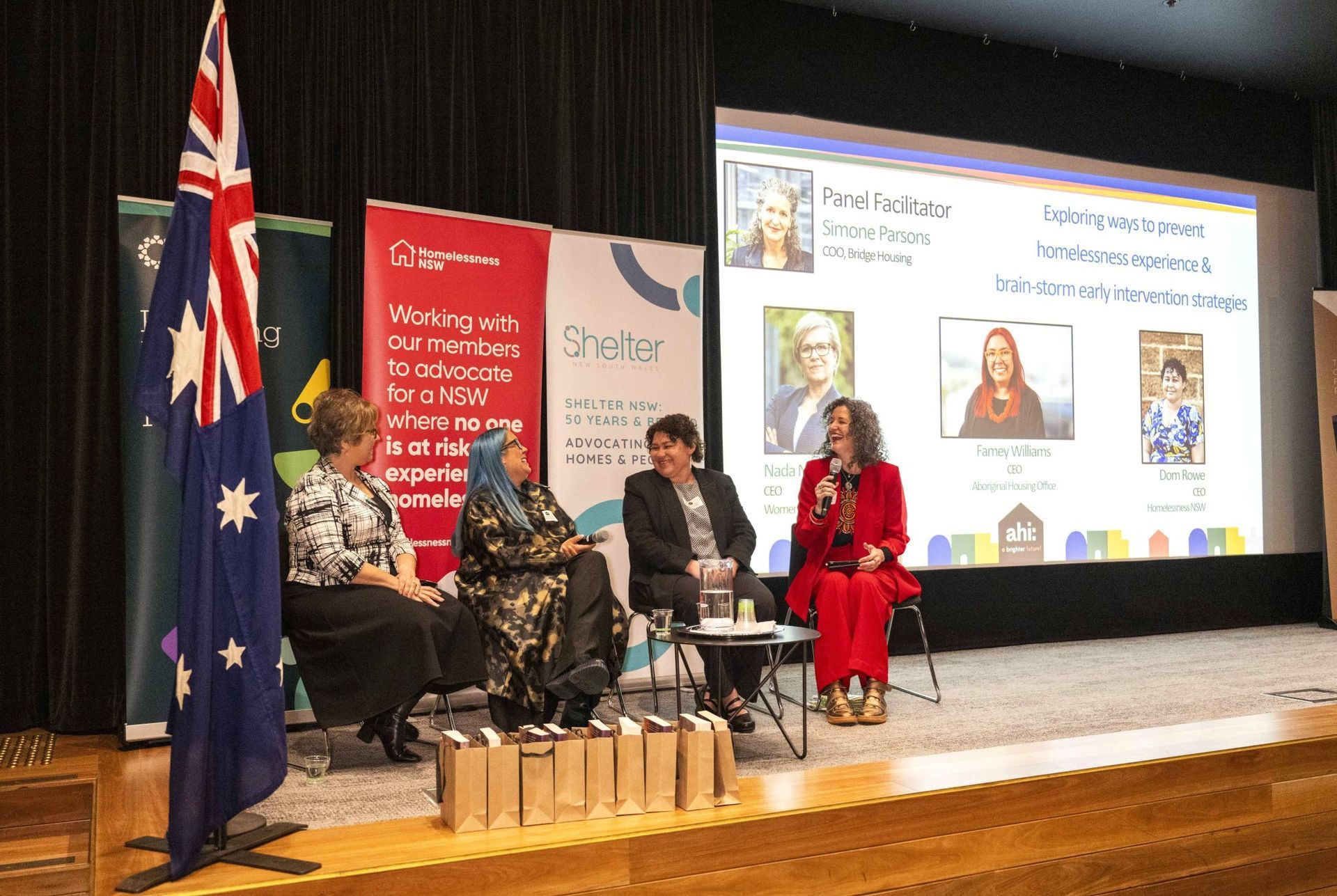
The AHI acknowledges the tireless efforts of those working within the homelessness sector, supporting the thousands of people experiencing homelessness and searching for meaningful pathways to live normal, productive and healthy lives. Our #HomelessnessWeek2025 sector forum in Sydney saw over 150 leaders, workers, politicians, policy makers, social impact collaborators, change makers and – most importantly - people with lived experience come together to talk about the impact of homelessness and share innovative responses within our community. Collaboration is key and the vibe in the room was inspiring. Real people making real differences. But we know it is far from enough and we must all strive to do more. We commend the NSW Minns Government, in particular the Hon Rose Jackson MLC, for their bold commitment to ‘make homelessness rare, brief and not repeated because people have a safe home and the support to keep it’ through the release of the NSW Homelessness Strategy 2025-2035. Thanks to Rebecca Pinkstone CEO Homes NSW and Dom Rowe CEO Homelessness NSW for their strong leadership and commitment to ending homelessness and providing more people with a home. The AHI continues to support and connect the workers who turn up, show up and get things done. Every single day. For more information, visit: https://www.nsw.gov.au/departments-and-agencies/homes-nsw/nsw-government-response-to-homelessness/nsw-homelessness-strategy-2025-2035 #HomelessnessWeek2025 #HomelessnessActionNow #Makeadifference #Leadingchange 
AI governance for community housing
By Dentons June 17, 2025
Love it or hate it, artificial intelligence is here to stay, and it’s playing an increasingly important role in housing. The Dentons team - Michael Park (Partner) and Antonia Hudson (Senior Associate) - provide us with a legal update on the use of AI for the Australian community housing sector, and AI governance tips for leaders of all organisations.
Harry Smith, new Australasian Housing Institute CEO
April 2, 2025
Harry Smith has recently commenced his role at the ahi as CEO after 26 years in the social services and government sectors across a range of diverse responsibilities. Harry brings a wealth of sector-specific knowledge and experience, supporting our members and our wider community.
More Articles