Administering Australian Housing Policy: practitioner perspectives

A feasible and effective governance and administrative structure is needed to deliver better housing policy outcomes.

There is an array of administrative, bureaucratic or institutional arrangements that deliver housing policy in Australia. While changes occur regularly in Australia’s public sector at the federal and state/territory levels, there has been little focus on the impact of such changes for the delivery of housing policy, or which arrangements are most suitable for effective delivery.


Published by AHURI in January 2026, this research aims to deepen our understanding of the design and impact of the ‘machinery of government’, with the aim of identifying and settling on a feasible and effective governance and administrative structure which will allow agencies – and the people working within them – the longevity and stability to deliver better policy outcomes.


The research project included a literature review of the existing knowledge of housing policy administration; semi-structured interviews with 12 current or retired housing officials who had experience working in government housing agencies; and a panel discussion with a subset of interviewees to validate and further explore identified themes.


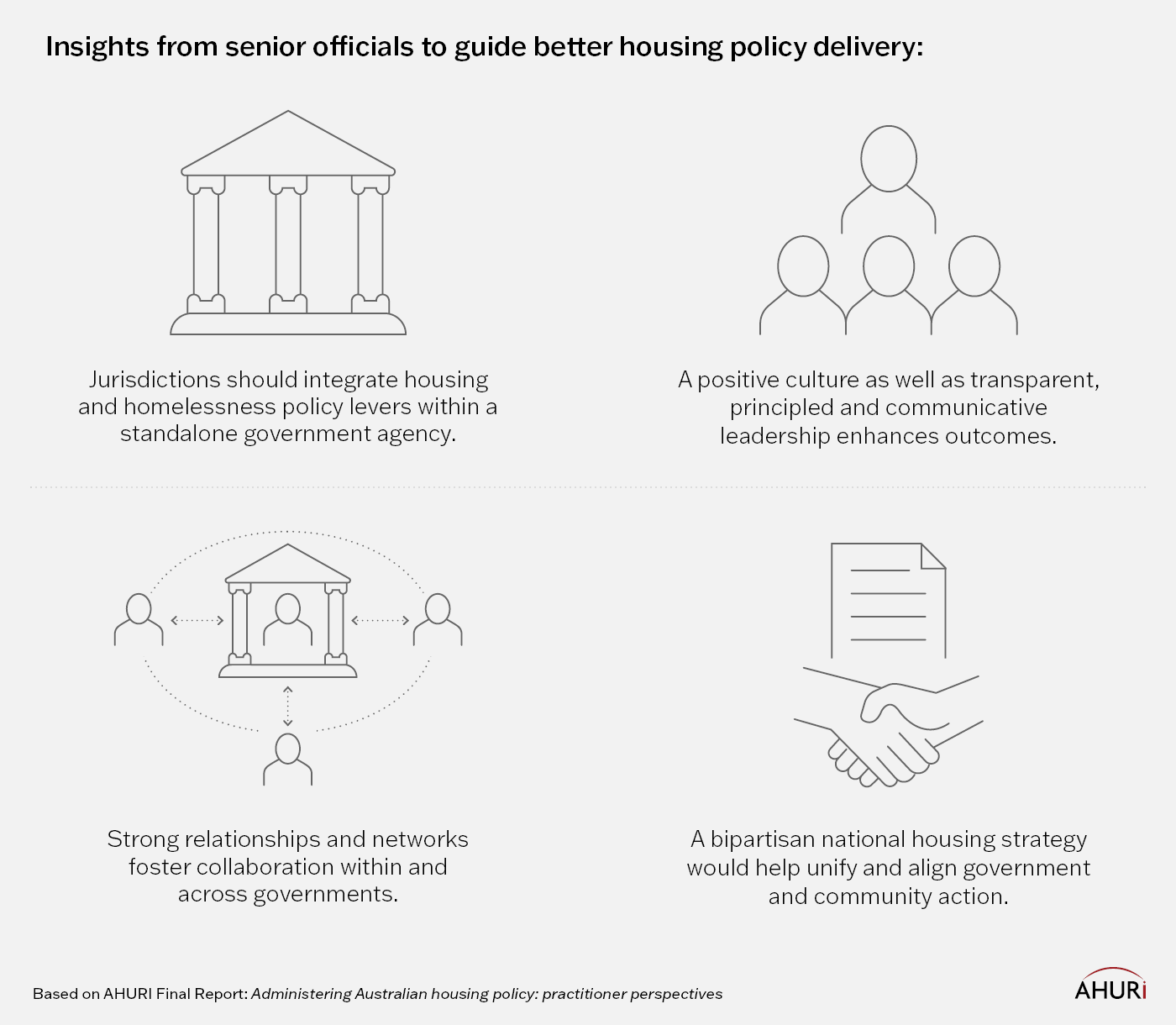
Insights from current and former senior state and territory housing officials informed the key findings and centred around three themes: the influence of machinery of government arrangements, the importance of culture and leadership, and the impact of politics and partisanship.


Recommended policy actions

  • A workable machinery of government design. There are several principles identified that could underpin a workable machinery of government design to inform future administration including: ensuring that housing functions are not integrated into a welfare ‘super’ department containing other human services functions; and managing housing asset and tenancy functions together so that conflicting incentives play out transparently.
  • A work culture that enhances machinery of government arrangements. This would foster clarity of purpose, leaders who support this organisational purpose and communicate transparently and collaboratively, communication channels that allow the free flow of information, and established effective interpersonal relationships, processes and practices.
  • A bipartisan national strategy. Partisan shifts in housing policy will continue to undermine the effectiveness of outcomes unless a coordinated approach is taken to stabilise housing system structures within Australia’s federated system.


Sean’s thoughts


It’s difficult to argue with a position that places all the decision-makers affecting housing in the same place. This allows clear housing outcomes to be articulated and challenged. Indeed, for many this would be the ideal position to take. However, there is need for caution. If policy and practice is delayed a year or two every time there is a new Minister or change of Government, what would be the impact to policy be with new Ministerial input following any of the elections across Australia. Would significant policy ever be advanced? 


To find out more about this research project and read the full report go to https://www.ahuri.edu.au/research/final-reports/453

Share This Article

Other articles you may like

August 10, 2025
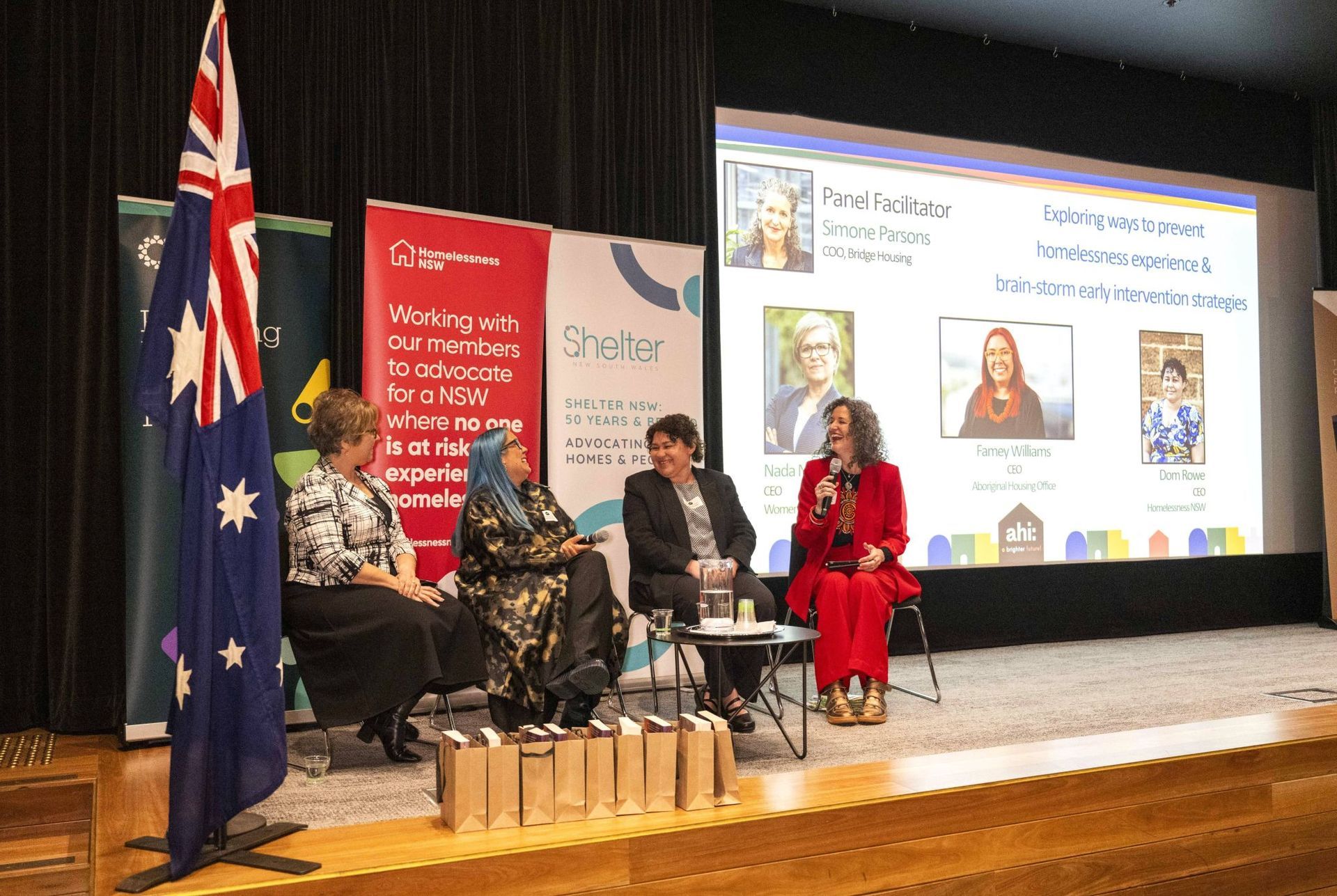
The AHI acknowledges the tireless efforts of those working within the homelessness sector, supporting the thousands of people experiencing homelessness and searching for meaningful pathways to live normal, productive and healthy lives. Our #HomelessnessWeek2025 sector forum in Sydney saw over 150 leaders, workers, politicians, policy makers, social impact collaborators, change makers and – most importantly - people with lived experience come together to talk about the impact of homelessness and share innovative responses within our community. Collaboration is key and the vibe in the room was inspiring. Real people making real differences. But we know it is far from enough and we must all strive to do more. We commend the NSW Minns Government, in particular the Hon Rose Jackson MLC, for their bold commitment to ‘make homelessness rare, brief and not repeated because people have a safe home and the support to keep it’ through the release of the NSW Homelessness Strategy 2025-2035. Thanks to Rebecca Pinkstone CEO Homes NSW and Dom Rowe CEO Homelessness NSW for their strong leadership and commitment to ending homelessness and providing more people with a home. The AHI continues to support and connect the workers who turn up, show up and get things done. Every single day. For more information, visit: https://www.nsw.gov.au/departments-and-agencies/homes-nsw/nsw-government-response-to-homelessness/nsw-homelessness-strategy-2025-2035 #HomelessnessWeek2025 #HomelessnessActionNow #Makeadifference #Leadingchange 
AI governance for community housing
By Dentons June 17, 2025
Love it or hate it, artificial intelligence is here to stay, and it’s playing an increasingly important role in housing. The Dentons team - Michael Park (Partner) and Antonia Hudson (Senior Associate) - provide us with a legal update on the use of AI for the Australian community housing sector, and AI governance tips for leaders of all organisations.
February 14, 2025
It is with great pleasure that we announce nominations are now open for the ahi: 2025 Brighter Future Awards .
More Articles