Short-term Rental Accommodation: models, impacts and policy responses

Understanding the range of short-term rental accommodation models, provider motivations, and impacts in different metropolitan and regional settings, is key to effective policy development and regulation.

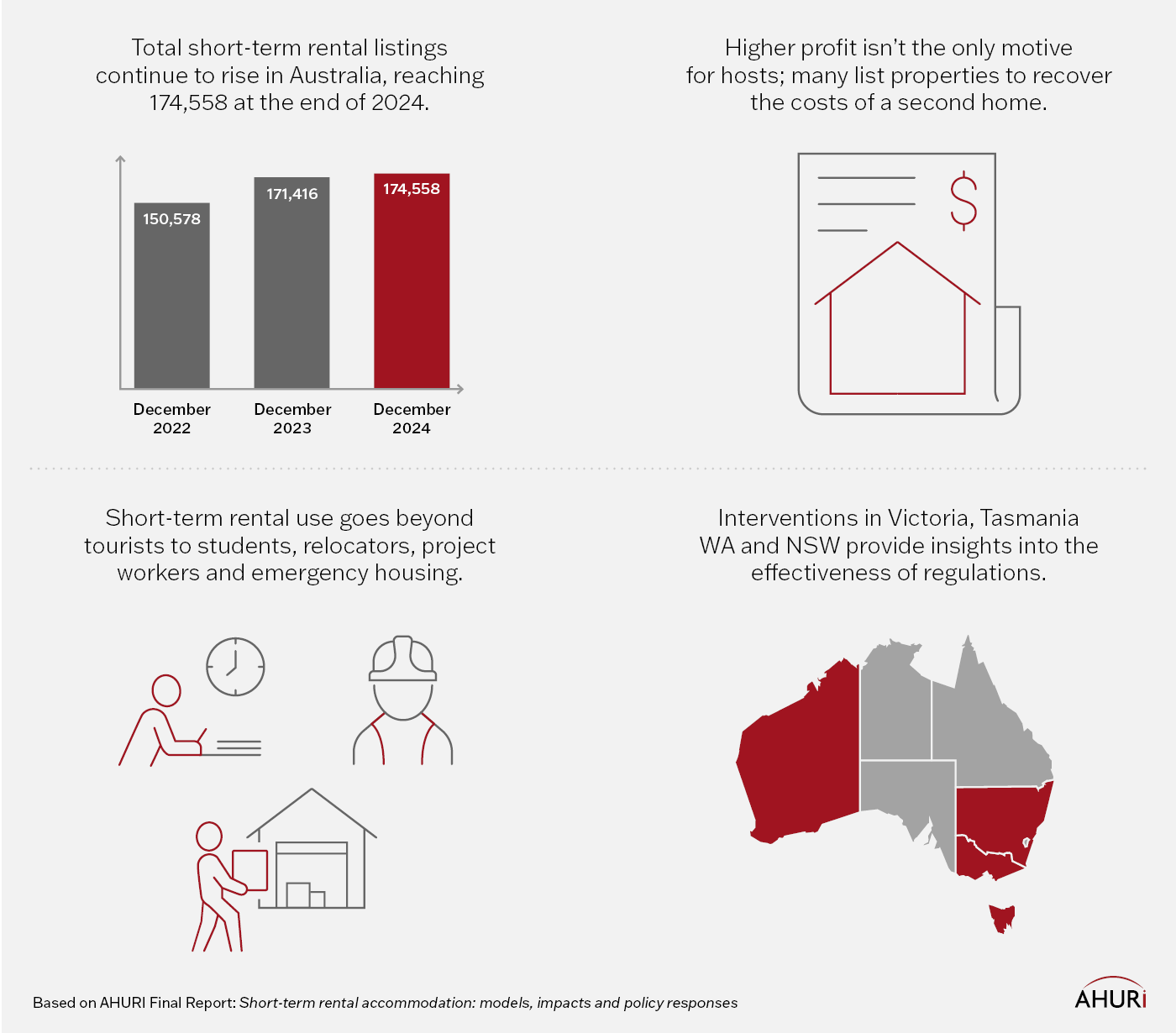
Published by AHURI in April 2026, this research investigated a range of short-term rental accommodation (STRA) models across Australia and their impacts on housing markets and communities. Researchers carried out case studies which looked at the the intersection of STRA with housing markets in Greater Sydney, the NSW South Coast and Tasmania. Interviews were conducted with managers and providers, local government and other stakeholders. 


They also looked at international approaches to this issue, where rising concern about the impact of STRA on house prices and rental costs has informed a range of strong restrictions, particularly in Europe and North America. These include such measures as strong registration and reporting requirements, limitations on the number of booking nights or locations where STRA can operate, imposing taxes or levies, and strengthening protections for long-term renters. 


Another key finding is that STRA owners and hosts are not necessarily motivated by higher rental returns. Understanding their motivations and financial considerations is vital when designing policies to limit or reverse the conversion of long-term rental properties to STRA.


Recommended policy actions

  • Build regulation on best practice. Leading practice in STRA policy emphasises such aspects as enforcing existing regulations through platform reporting, user-based registration and compliance mechanisms, and protecting the rights of renters by restricting the conversion of long-term homes to STRA.
  • Adopt an all-of-government response. All levels of government have a role to play.  In particular local governments in high-demand areas need support in developing and implementing policy responses.
  • Facilitate STRA use as emergency housing. There is a strategic opportunity to use the short-term housing sector as emergency housing in response to crisis events and demand shocks.
  • Develop support programs. States can support local councils and housing providers by establishing programs to support property owners wishing to transition from STRA and/or to make properties available as temporary or crisis accommodation.
  • Retain levies for local purposes. Resources collected through financial levies on STRA should be spent in the local area to help alleviate housing and infrastructure pressures created by short term visitors.
  • Compel platforms to share data. Government leadership is needed to ensure platforms supply the detailed and timely property-level data needed to enforce regulations and monitor impacts.


Sean’s thoughts


Short-term rental accommodation has a role to play across Australia. Indeed, many regional communities need short-term rental properties to be available to support their local economies, whether that is tourism or short-term employment. The need in Far North Queensland is very different from that in inner Sydney. For our colleagues in New Zealand, the need in Auckland is very different from the Bay of Plenty. The political instinct is to use a blunt ‘one size fits all’ response. This must be resisted.  Decisions need to be based on evidence that is local and relevant. There is one issue that needs to be addressed; the loss of long-term properties to short-term accommodation where they are needed most, is not sustainable nor desirable.


This is paragraph text. Click it or hit the Manage Text button to change the font, color, size, format, and more. To set up site-wide paragraph and title styles, go to Site Theme.

Share This Article

Other articles you may like

August 10, 2025
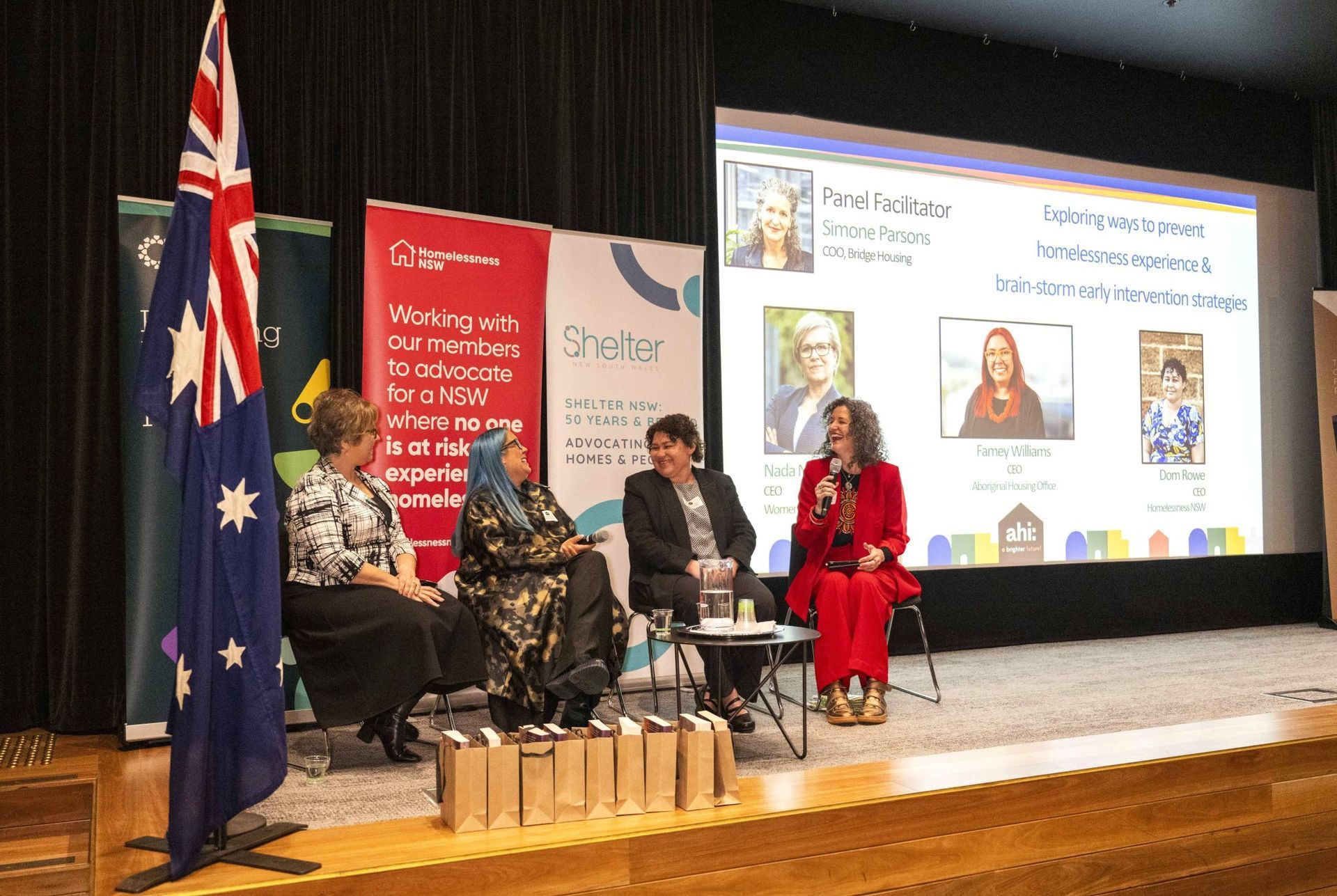
The AHI acknowledges the tireless efforts of those working within the homelessness sector, supporting the thousands of people experiencing homelessness and searching for meaningful pathways to live normal, productive and healthy lives. Our #HomelessnessWeek2025 sector forum in Sydney saw over 150 leaders, workers, politicians, policy makers, social impact collaborators, change makers and – most importantly - people with lived experience come together to talk about the impact of homelessness and share innovative responses within our community. Collaboration is key and the vibe in the room was inspiring. Real people making real differences. But we know it is far from enough and we must all strive to do more. We commend the NSW Minns Government, in particular the Hon Rose Jackson MLC, for their bold commitment to ‘make homelessness rare, brief and not repeated because people have a safe home and the support to keep it’ through the release of the NSW Homelessness Strategy 2025-2035. Thanks to Rebecca Pinkstone CEO Homes NSW and Dom Rowe CEO Homelessness NSW for their strong leadership and commitment to ending homelessness and providing more people with a home. The AHI continues to support and connect the workers who turn up, show up and get things done. Every single day. For more information, visit: https://www.nsw.gov.au/departments-and-agencies/homes-nsw/nsw-government-response-to-homelessness/nsw-homelessness-strategy-2025-2035 #HomelessnessWeek2025 #HomelessnessActionNow #Makeadifference #Leadingchange 
AI governance for community housing
By Dentons June 17, 2025
Love it or hate it, artificial intelligence is here to stay, and it’s playing an increasingly important role in housing. The Dentons team - Michael Park (Partner) and Antonia Hudson (Senior Associate) - provide us with a legal update on the use of AI for the Australian community housing sector, and AI governance tips for leaders of all organisations.
Harry Smith, new Australasian Housing Institute CEO
April 2, 2025
Harry Smith has recently commenced his role at the ahi as CEO after 26 years in the social services and government sectors across a range of diverse responsibilities. Harry brings a wealth of sector-specific knowledge and experience, supporting our members and our wider community.
More Articles